Thursday, 18 January 2018

Electrical Engineering MCQ Multiple Choice Questions and Answers 1-15

  4 comments
January 18, 2018

Multiple Choice Questions of Electric Current and Ohm's Law (1-15):


Electrical Engineering MCQ 1 TO 15
Multiple Choice Questions and Answers
Latest Transformers Interview Questions and Answers List


1.Resistivity of a wire depends on
(A) length
(B) material
(C) cross section area
(D) none of the above.

2. When n resistances each of value r are connected in parallel, then resultant resistance is x. When these n resistances are connected in series, total resistance is
(A) nx
(B) rnx
(C) x / n
(D) n2 x.

3. Resistance of a wire is r ohms. The wire is stretched to double its length, then its resistance in ohms is
(A) r / 2
(B) 4 r
(C) 2 r
(D) r / 4.

4. Kirchhoff's second law is based on law of conservation of
(A) charge
(B) energy
(C) momentum
(D) mass.

5. The diameter of the nucleus of an atom is of the order of
(A) 10 -31 m
(B) 10 -25 m
(C) 10 -21 m
(D) 10 -14m.

6. The mass of proton is roughly how many times the mass of an electron?
(A) 184,000
(B) 184,00
(C) 1840
(D)184.

7. The charge on an electron is known to be 1.6 x 10⁻¹⁹ coulomb. In a circuit the current flowing is 1 A. How many electrons will be flowing through the circuit in a second?
(A) 1.6 x 10¹⁹
(B) 1.6 x 10⁻¹⁹
(C) 0.625 x 10¹⁹
(D) 0.625 x 10¹².

8. Two bulbs marked 200 watt-250 volts and 100 watt-250 volts are joined in series to 250 volts supply. Power consumed in circuit is
(A) 33 watt
(B) 67 watt
(C) 100 watt
(D) 300 watt.

9. Ampere second could be the unit of
(A) power
(B) conductance
(C) energy
(D) charge.

10. Which of the following is not the same as watt?
(A) joule/sec
(B) amperes/volt
(C) amperes x volts
(D) ( amperes )2 x ohm.

11. One kilowatt hour of electrical energy is the same as
(A) 36 x 105 watts
(B) 36 x 10s ergs
(C) 36 x 105 joules
(D) 36 x 105 B.T.U.

12. An electric current of 5 A is same as
(A) 5 J / C
(B) 5 V / C
(C) 5 C / sec
(D) 5 w / sec.

13. An electron of mass m kg and having a charge of e coulombs travels from rest through a potential difference of V volts. Its kinetic energy will be 
(A) eV Joules
(B) meV Joules
(C)me / V Joules
(D)V / me Joules.

14. The value of the following is given by 100 (kilo ampere ) x ( micro ampere ) 100 milli ampere * 10 ampere
(A) 0.001 A
(B) 0.1 A
(C) 1 A
(D) 10A.

15. A circuit contains two un-equal resistances in parallel
(A) current is same in both
(B) large current flows in larger resistor
(C) potential difference across each is same
(D) smaller resistance has smaller conductance.
 Basic Electrical MCQs 16 to 30    Transformer MCQs 21 to 40

Read More

Monday, 8 January 2018

Atom A Smallest Particle of Matter

  No comments
January 08, 2018

Atom A Smallest Particle of Matter

A matter ex. copper,silicon,carbon,iron are the combination of multiple small particles of Atom.Every matters may be solid liquid or gas, all of these having smallest particles called as Atom.


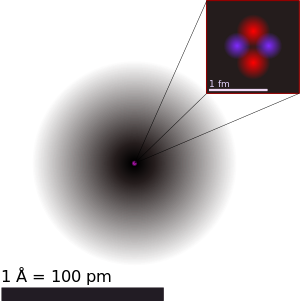
 the above figure shows helium atom. At the centre of any atom has nucleus. Nucleus consist number of proton and neutron in same quantity. 99.94% mass of atom consist in nucleus.
The black cloud shows the electron.due to very high electron circulate around nucleus ,electron seen as cloud and blur at outer to inner.

Part of Atom: Neutron,Proton and Electron


  • Neutron: It present at centre of atom with proton with same number of quantity. it have no charge means it is neutral.(No-Charge)
  • Proton: It present at the centre of atom with same no. of  Neutron. It Have positive charged.  (+ve Charged)
  • electron: It present outside of nucleus and circulate around. Speed of circulation is very high hence it seen as cloud.It have Negative Charge(-ve Charged)

Read More

Electrical Fundamentals

  No comments
January 08, 2018

Electrical Fundamentals

In electrical fundamentals topic you learn about
  • what is electricity
  • electric charge
  • electric current
  • type of current
  • electric voltage
1-What is electricity: Electricity is a type of energy which have power. But electrical energy directly not used in any application, electrical energy is generally converted into another form of energy or force. 
for example:
when we supply electrical energy to a motor, there in electrical energy converted to electromagnetic energy which produced magnetic field in motor. Now electromagnetic flux/field produce torque in motor then motor run.
more examples: electrical convert to light (device light display etc)
electrical to sound, electrical to torque, electrical to electromagnetic field etc.

2-Electric charge: Electric charge is a property of an electron. there are two type of charge exist in an atom one is protones consist positive charge and another is electron consist Negative charge. And Neutron are neutral in nuclear present in center of an atom.
You know electric current flows in only good conductor this is due to electron and proton present in an atom. if electron and proton is same then no electron flow this material called bad conductor.if electron is more than proton then it is good conductor or vice-versa.
unit: coulomb
3-Electric current: Electric current is flow of electron in a conductor.When electron of an atom is flow in any one direction then it is called as electric current flow in conductor.
Electric current flow in material which have free electron. And free electron are available in only good conductors .overall to know, electron flow in conductor is current.
unit: Ampare

4-Current are two type: AC And DC
AC current: The current which change direction sinusoidal with time is Alternating current.
DC current: The current which not change direction with time is Direct current.
5-Electric voltage: Electric voltage is potential difference between two source.It is also called emf,voltage,potential difference. unit is volt.
Voltage produces flow of current. Current flow in direction from high potential source to low potential source. ex. current flow from positIve to negative direction in case of DC . In case of AC current flow from phase wire to ground or earth.


best example is lightning, when cloud spark then always electrical charges drop down to earth because earth has approximately zero potential.
As shown in above figure electron flow from negative charge to positive charge.but direction of current consider as always opposite to it.Mean current flow from positive to negative direction.


Read More

Thursday, 21 December 2017

New Electrical Whatsapp Group Link

  34 comments
December 21, 2017

New Electrical Whatsapp Group link


There are some new electrical group link 
 Choose any one electrical group link
 There are most of the user are electrical engineering students and polytechnic and iti students so I think it can help you  !!! Join and comment below  ...thanks

1) Electrical Study Group
   
2) Electrical Technology Group


If you have group link ..
comment below!!! 

Read More

Sunday, 17 December 2017

Construction And Working Of DC motor

  No comments
December 17, 2017


Construction And Working Of  DC motor
A motor is an electrical machine which converts electrical energy into mechanical energy.


    CONSTRUCTION:
A DC machine consists two basic parts - stator and rotor. Basic constructional parts of a DC machine are described below.

Yoke:
The outer frame of a dc machine is called as yoke. It is made up of cast iron or steel. It not only provides mechanical strength to the whole assembly but also carries the magnetic flux produced by the field winding.

Poles and pole shoes:

Poles are joined to the yoke with the help of bolts or welding. They carry field winding and pole shoes are fastened to them. Pole shoes serve two purposes; (i) they support field coils and (ii) spread out the flux in air gap uniformly.

Field winding:

They are usually made of copper. Field coils are former wound and placed on each pole and are connected in series. They are wound in such way that, when energized, they form alternate North and South poles.

Armature core: Rotor
Armature core is the rotor of the machine. It is cylindrical in shape with slots to carry armature winding. The armature is built up of thin laminated circular steel disks for reducing eddy current losses. It may be provided with air ducts for the axial air flow for cooling purposes. Armature is keyed to the shaft.

Armature winding:

It is usually a former wound copper coil which rests in armature slots. The armature conductors are insulated from each other and also from the armature core. Armature winding can be wound by one of the two methods; lap winding or wave winding. Double layer lap or wave windings are generally used. A double layer winding means that each armature slot will carry two different coils.

Commutator and brushes:

Physical connection to the armature winding is made through a commutator-brush arrangement. The function of a commutator, in a dc generator, is to collect the current generated in armature conductors. Whereas, in case of a dc motor, commutator helps in providing current to the armature conductors. A commutator consists of a set of copper segments which are insulated from each other. The number of segments is equal to the number of armature coils. Each segment is connected to an armature coil and the commutator is keyed to the shaft. Brushes are usually made from carbon or graphite. They rest on commutator segments and slide on the segments when the commutator rotates keeping the physical contact to collect or supply the current.

   DC Motor Vs DC Generator
  Construction of DC Motor and DC Generator is same
  And both are called as DC machine.

 Working Principle of DC Motor :

Working Principle Of A DC Motor

A motor is an electrical machine which converts electrical energy into mechanical energy.
The principle of working of a DC motor is that "whenever a current carrying conductor is placed in a magnetic field, it experiences a mechanical force". The direction of this force is given by Fleming's left hand rule and it's magnitude is given by F = BIL. Where, B = magnetic flux density, I = current and L = length of the conductor within the magnetic field.

Fleming's left hand rule: If we stretch the first finger, second finger and thumb of our left hand to be perpendicular to each other AND direction of magnetic field is represented by the first finger, direction of the current is represented by second finger then the thumb represents the direction of the force experienced by the current carrying conductor.

  Working of DC Motor

 When armature windings are connected to a DC supply, current sets up in the winding. Magnetic field may be provided by field winding (electromagnetism) or by using permanent magnets. In this case, current carrying armature conductors experience force due to the magnetic field, according to the principle stated above.

Commutator is made segmented to achieve unidirectional torque. Otherwise, the direction of force would have reversed every time when the direction of movement of conductor is reversed the magnetic field.


Read More

Saturday, 31 December 2016

Types of Electrical Motors

  No comments
December 31, 2016

Clssification of Motors

Types of  Motors

Classification Based On Power Supply:
1. Alternating Current (AC) Motors.
2. Direct Current (DC) Motor.
types-of-electric-motors

Types of AC Motors :

⇒Classification Based On Principle of Operation:

(a) Synchronous Motors.
1. Plain
2. Super


(b) Asynchronous Motors.
1. Induction Motors:
(a) Squirrel Cage
(b) Slip-Ring (external resistance).
2. Commutator Motors:
(a) Series
(b) Compensated
(c) Shunt
(d) Repulsion
(e) Repulsion-start induction
(f) Repulsion induction

⇒Classification Based On Type of Current:
1. Single Phase
2. Three Phase

⇒Classification Based On Speed of Operation:
1. Constant Speed.
2. Variable Speed.
3. Adjustable Speed.

⇒Classification Based On Structural Features:
1. Open
2. Enclosed
3. Semi-enclosed
4. Ventilated
5. Pipe-ventilated
6. Riveted frame-eye etc.

Types of DC Motor :


1. Permanent-magnet motors
2. Brushed DC Motor 

a.       DC shunt-wound motor
b.      DC series-wound motor
c.       DC compound motor
                                      i.      Cumulative compound
                                      ii.      Differentially compounded
d.      Permanent magnet DC motor
e.       Separately excited

3. Brushless DC Motor
4. Coreless or ironless DC motors
5. Printed armature or pancake DC motors
6. Universal motors


Read Basic of Electric Motors

Read More

Basic of Electric Motor

  No comments
December 31, 2016

Basic of Electric Motor

Define Electric Motor :

Electric motor is an elctric rotating machine which convert electrical energy into rotating mecanical energy.

What is Electric Motor ?

An Electric motor is a machine which converts electrical energy  into mechanical energy. Its work is based on the principle that when a current-carrying conductor is placed in a magnetic field, it experiences a mechanical force whose direction is given by Fleming’s Left-hand Rule .

basic-of-electric-motor

⇒History the First Electric Motor :

  • First electric motors were simple electrostatic devices created by the Scottish monk Andrew Gordon in the 1740.

  • The theoretical principle behind production of mechanical force by the interactions of an electric current and a magnetic field, Amperes force law, was discovered later by Andre-Marie Ampere in 1820.


  • The conversion of electrical energy into mechanical energy by electromagnetic means was demonstrated by the British scientist Michael Faraday in 1821.  
Read Classificatin of Electrical Motors

Read More

Torque-slip characteristic for a three phase induction motor

Relation between torque and slip torque / slip curve is shown in figure: fig. Torque-slip characteristic  For range s=0 to s=1 wit...